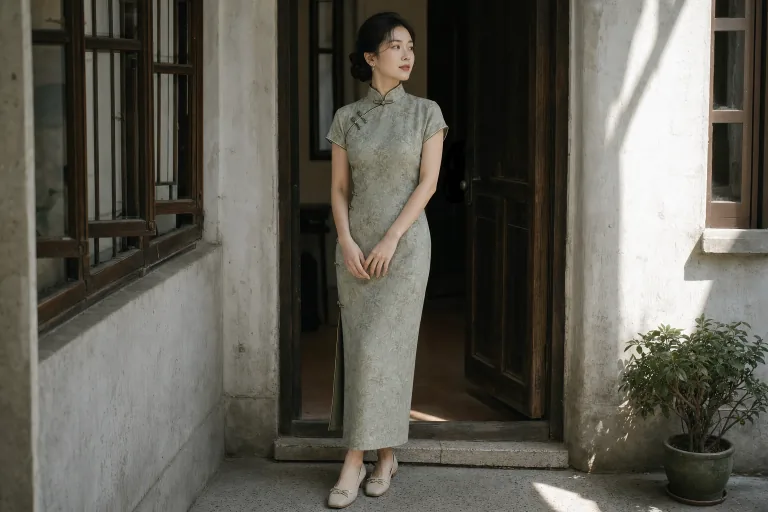
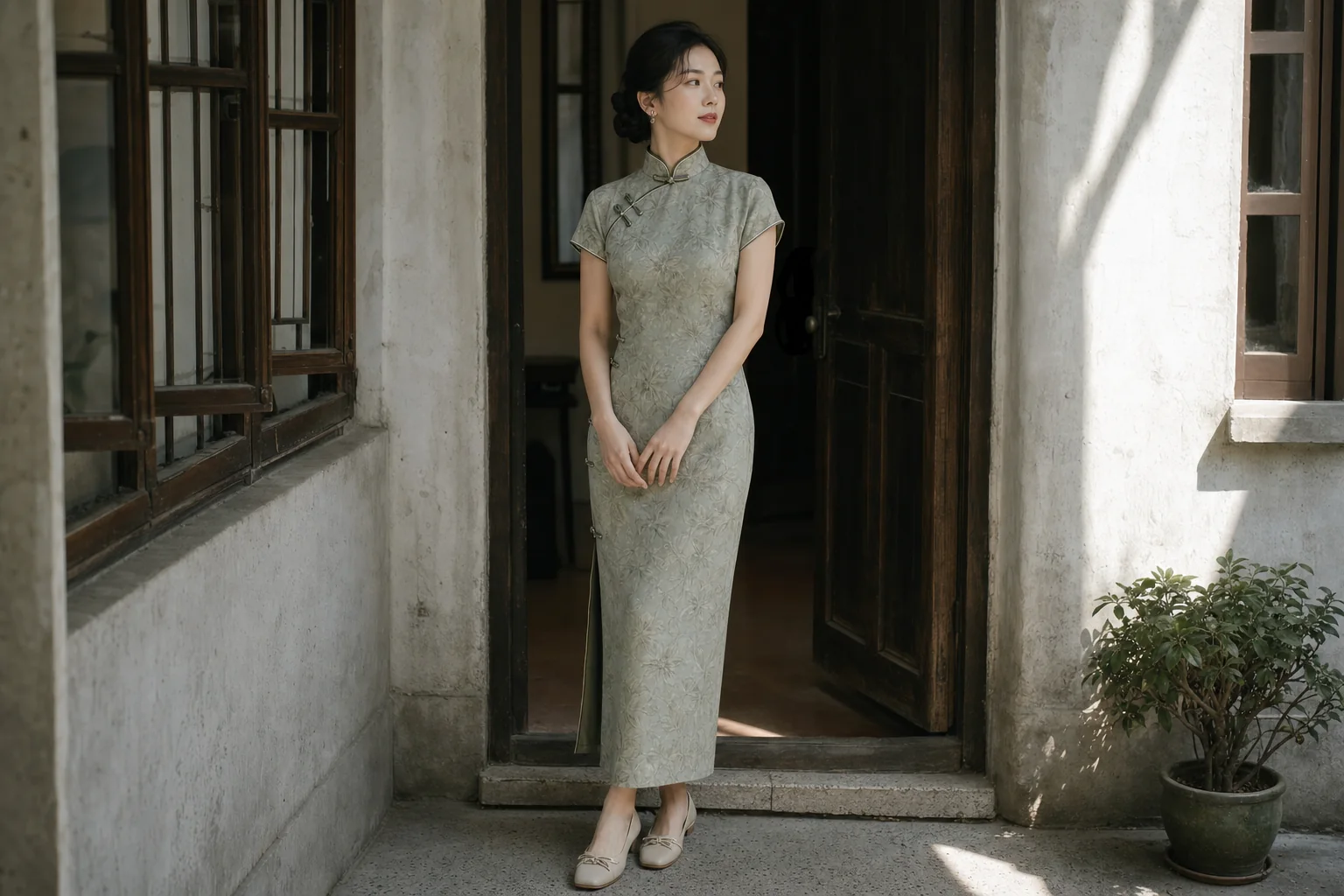
Preview a qipao on your original subject with a standing collar, pankou knot buttons, side closures, and era-suited fabric motifs while keeping the person, pose, lighting, and setting recognizable.
Preview a qipao with a standing collar, pankou knot buttons, fitted or relaxed shaping, side closures, and fabric motifs suited to the requested era. Preserve the same person, face, body proportions, pose, lighting, camera angle, and background. Change only the clothing and coordinated accessories.
What is Qipao Dress Try-On?
Qipao Dress Try-On helps you create a visual preview of a qipao on a chosen subject. The result focuses on recognizable qipao details such as a standing collar, pankou knot buttons, side closures, fitted or relaxed shaping, and fabric motifs that suit the requested era or occasion.
How the image is transformed
This template focuses on clothing transformation: the source subject is shown in a qipao-inspired dress while the original image identity and composition remain the anchor.
What changes
Preview the subject wearing a qipao with a standing collar, pankou knot buttons, side closures, and fabric motifs suited to the requested era.
Adjust the clothing toward a fitted or relaxed qipao shape while keeping the overall image composition stable.
Change only the clothing and coordinated accessories, not the person, pose, lighting, camera angle, or background.
Refine the direction by specifying decade, region, fabric, motif, sleeve length, occasion, and tailoring mood when those details matter.
What stays consistent
Preserve the same person, face, body proportions, pose, lighting, camera angle, and background.
Keep the main subject recognizable from the source image.
Maintain coherent defining colors, pose, silhouette, and important subject details.
Qipao Try-On workflow
A clear source image and a specific style direction help the qipao preview stay coherent while preserving the original person and scene.
1
Upload a clear source
Choose a sharp image where the subject, face, pose, and clothing area are visible enough for the dress shape and collar details to be formed clearly.
2
Set the qipao style
Describe the desired qipao direction, including fit, era, fabric motif, sleeve length, formality, and any coordinated accessories you want to include.
3
Review the result
Create the preview and compare it with the original image for subject identity, pose, silhouette, lighting, and background consistency.
4
Refine the direction
If needed, refine the prompt with clearer details about the collar, pankou buttons, side closures, fabric, or occasion, then review the updated image again.
Qipao style variations
These examples show different ways a Qipao Dress Try-On preview can emphasize silhouette, fabric, and styling while preserving the original subject.
Classic qipao preview
A polished qipao preview with a defined standing collar, pankou knot buttons, and a balanced dress shape suited to a clear portrait or full-body source.
Era-inspired qipao look
A creative qipao try on direction that can emphasize fabric motifs, coordinated accessories, and an era-inspired mood while keeping the subject recognizable.
Ways to use Qipao Dress Try-On
Use this qipao try on workflow when you want a focused clothing preview before refining, sharing, or comparing a creative direction.
Personal styling preview
Create a Qipao Dress Try-On preview for a portrait, styling concept, mood board, or personal creative project.
Style comparison
Compare fitted and relaxed qipao shapes, sleeve choices, collar treatments, fabric motifs, and era-inspired directions before choosing one to refine.
Composition planning
Explore how a qipao look might fit an existing pose, background, and lighting setup without changing the overall image composition.
Creative discussion
Prepare a visual draft to discuss with collaborators, stylists, family, or a knowledgeable source when cultural or era details need review.
How to guide the result
For a stronger Qipao Dress Try-On result, pair a clear source image with direct style instructions. Mention the desired era, fit, fabric, motif, sleeve length, and whether the look should feel formal, vintage, modern, or understated.
Source image checks
Use a sharp source image with the main subject clearly visible.
Avoid heavy blur, blocked details, extreme crops, or confusing overlaps.
Choose a source whose pose and framing support the intended Qipao Dress Try-On result.
Prompt direction
Preview a qipao with a standing collar, pankou knot buttons, fitted or relaxed shaping, side closures, and fabric motifs suited to the requested era. Preserve the same person, face, body proportions, pose, lighting, camera angle, and background. Change only the clothing and coordinated accessories.
What to review
Before sharing or presenting the result, review both the subject preservation and the qipao styling details. The image is a visual draft and may need a clearer source or more specific instructions.
Subject match
Compare the face, body proportions, pose, and defining features with the source image to make sure the person remains recognizable.
Qipao details
Look for a coherent standing collar, pankou knot buttons, side closures, sleeve shape, and fitted or relaxed qipao silhouette.
Image quality
Inspect faces, hands, edges, small objects, fabric patterns, and background transitions for visual artifacts or uneven changes.
Cultural and era review
If the qipao is meant to suggest a specific decade, region, ceremony, or tailoring tradition, review the details with an informed reference before relying on them.
Qipao Try-On FAQ
These answers cover source images, styling expectations, subject preservation, and what to review before using a qipao try on result.
What is Qipao Dress Try-On?
Qipao Dress Try-On is a visual preview that changes the subject’s clothing into a qipao while aiming to keep the same person, pose, body proportions, lighting, camera angle, and background intact.
What photo works best?
Use a sharp, well-lit image where the subject’s face, body outline, and clothing area are visible. A front-facing or three-quarter pose usually gives the qipao collar, buttons, side closure, and silhouette more room to appear clearly.
Is the preview historically or ceremonially exact?
Treat the result as a creative preview rather than a verified historical, ceremonial, or tailoring reference. Qipao styles vary by decade, region, occasion, and tailoring tradition, so check important details with a knowledgeable source when accuracy matters.
What Qipao Dress Try-On changes?
It changes the clothing and coordinated accessories toward a qipao look, including details such as a standing collar, pankou knot buttons, shaped seams, side closures, and decorative fabric motifs. The person and scene should remain recognizable.
Which source image works best?
Choose an image without heavy blur, extreme crops, blocked body details, or confusing overlaps. The pose and framing should support the intended Qipao Dress Try-On online preview.
How do I keep the subject recognizable?
Start with a clear portrait or full-body image and avoid prompts that ask for major changes to the face, pose, body proportions, camera angle, lighting, or background. Review the output against the source before using it.
What should I review before using the result?
Check the subject identity, qipao silhouette, collar, pankou buttons, side closure placement, hands, face, edges, small objects, and background transitions. Generated details can vary and may need a clearer source or more specific direction.
Start your Qipao Dress Try-On
Use a clear image and preview a qipao direction with recognizable subject details, coherent tailoring cues, and fabric motifs suited to your intended era or occasion.