


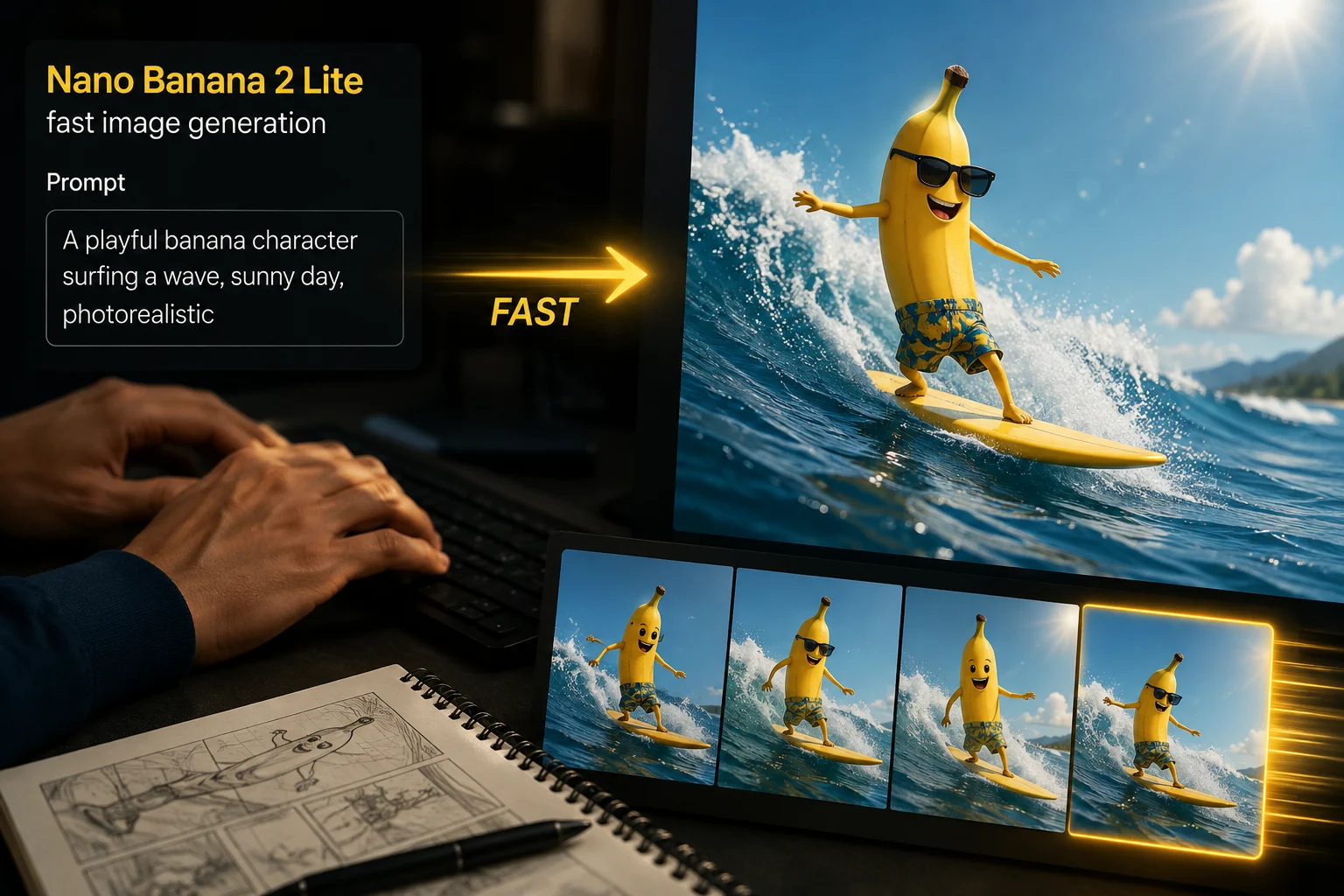
Penjanaan Imej Pantas
Nilai penjanaan imej pantas sebagai tuntutan kedudukan, kemudian periksa sama ada draf sepadan dengan arahan, subjek, perincian dan format.
Terokai Nano Banana 2 Lite sebagai model imej yang tidak tersedia dalam ClipCanva, dengan input, output, had dan keperluan semakan yang disahkan.
Halaman ini mengekalkan identiti model yang tepat dan tidak menjalankan model lain dengan nama yang sama. Gunakan pautan model berkaitan di bawah untuk membuka aliran kerja yang sudah disambungkan.
Nano Banana 2 Lite ialah model Google Gemini 3.1 Flash-Lite Image yang diposisikan untuk penjanaan dan penyuntingan pantas serta cekap.
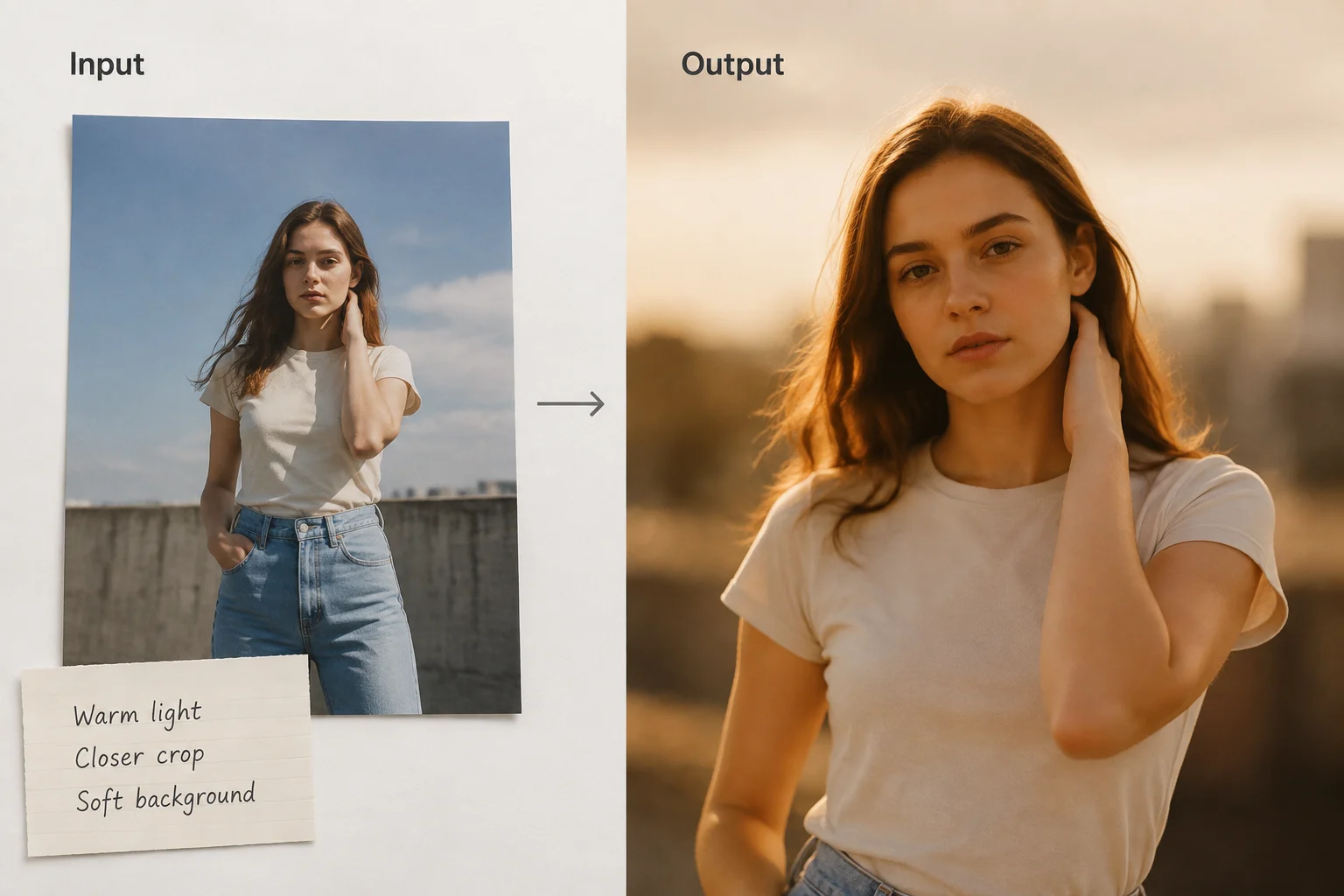
Semak keupayaan yang didokumenkan sebagai petunjuk perancangan, kemudian sahkan setiap output imej berbanding ringkasan sebenar sebelum pengeluaran.
Nilai penjanaan imej pantas sebagai tuntutan kedudukan, kemudian periksa sama ada draf sepadan dengan arahan, subjek, perincian dan format.
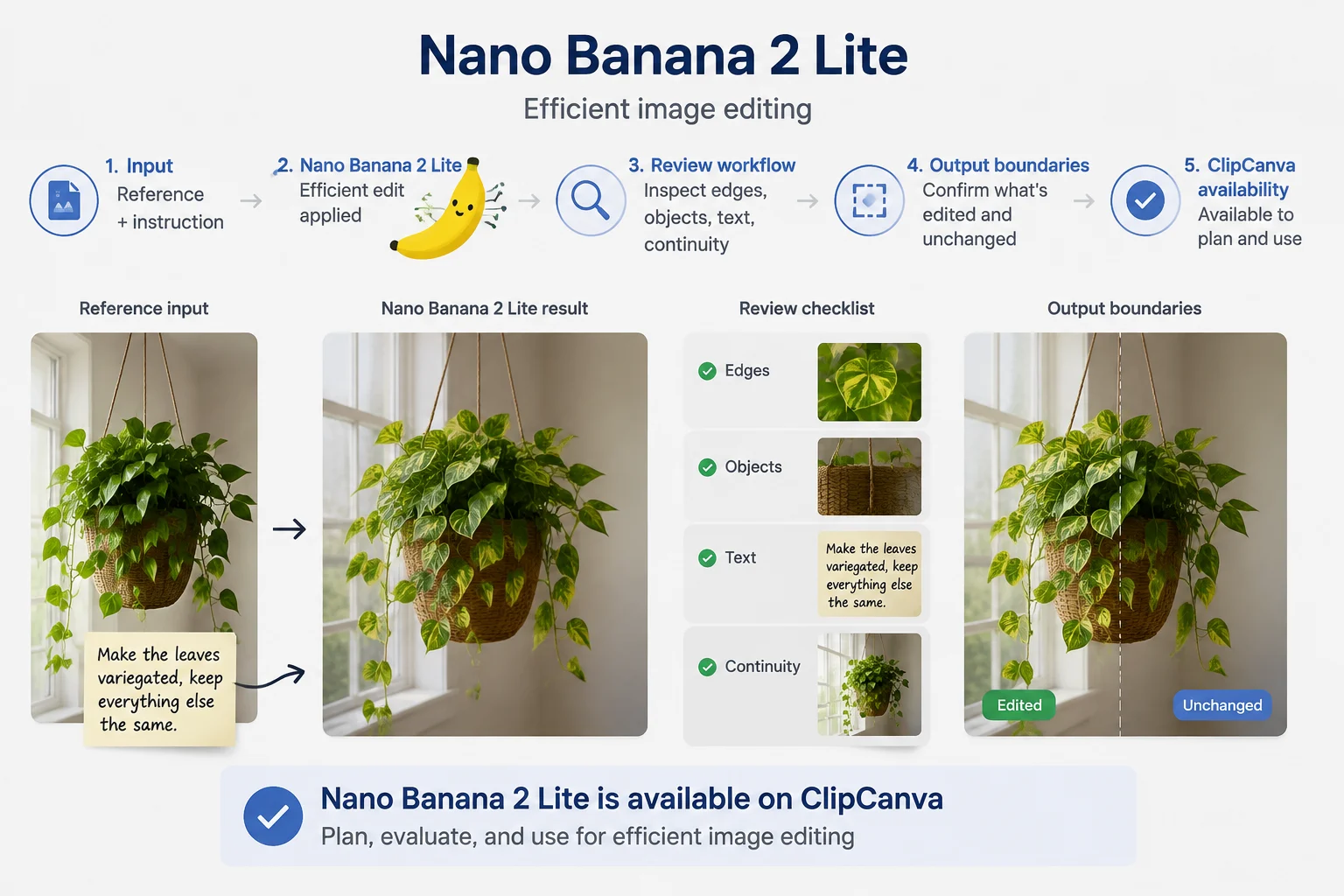
Nilai penyuntingan imej cekap untuk perubahan berpandukan rujukan, kemudian periksa tepi, objek, teks dan kesinambungan sebelum kelulusan.
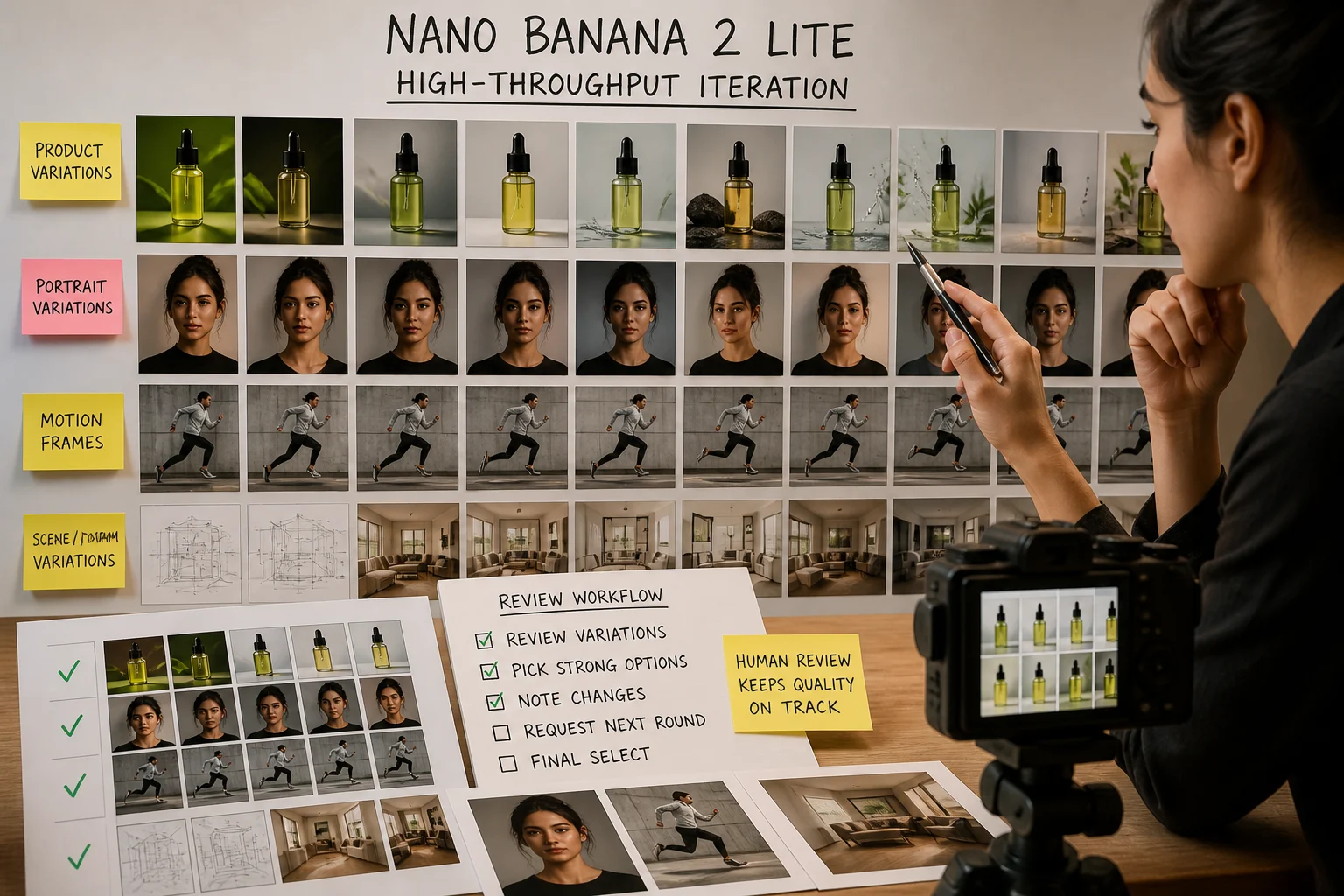
Gunakan iterasi berdaya pemprosesan tinggi sebagai titik perbandingan untuk perancangan variasi sambil mengekalkan semakan manusia dalam aliran kerja.
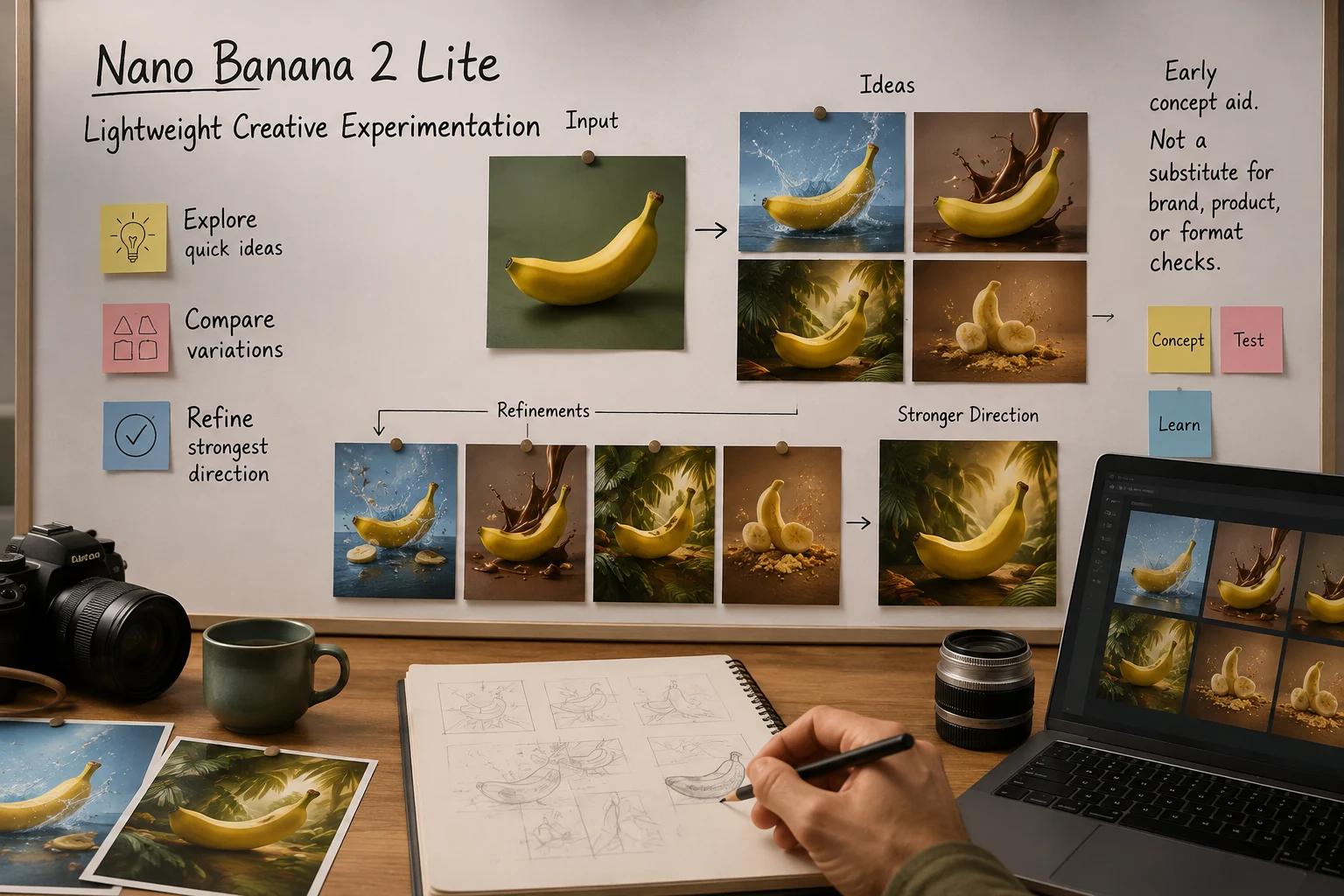
Anggap eksperimen kreatif ringan sebagai bantuan konsep awal, bukan pengganti semakan jenama, produk dan format.
Asingkan mod input yang dijangka daripada kawalan ClipCanva, kerana model tepat ini didokumenkan di sini tetapi tidak disambungkan.
Rancang berdasarkan arahan teks dan, jika relevan, imej rujukan, sambil menganggap halaman langsung sebagai sumber kebenaran.
ClipCanva tidak menyediakan kawalan bagi model tepat yang tidak tersedia ini, jadi pasukan tidak patut merancang berdasarkan tetapan penyedia Lite tersembunyi.
Bagi model Lite yang tidak disambungkan ini, output yang dijangka ialah imej dijana dan suntingan berpandukan rujukan yang memerlukan semakan sebelum penerbitan.
Ikuti aliran kerja perancangan yang bermula dengan arahan dan berakhir dengan semakan manusia, khususnya apabila akses tidak tersedia.
Nyatakan tujuan imej, audiens, subjek, latar, format dan keputusan yang perlu disokong oleh output.
Tulis arahan yang jelas dan kumpulkan hanya aset rujukan yang relevan dengan suntingan atau hala tuju visual yang dimaksudkan.
Sahkan status ketersediaan semasa dan elakkan mengandaikan kawalan yang tidak disediakan oleh ClipCanva.
Bandingkan hasil imej dengan ringkasan, semak satu arahan yang lemah pada satu masa dan dokumentasikan dapatan semakan.
Kes penggunaan paling kukuh apabila setiap tugasan mempunyai audiens, format, standard semakan dan titik keputusan yang ditentukan.
Petakan hala tuju kreatif yang luas kepada set variasi arahan berstruktur, kemudian bandingkan hasil dengan satu matlamat.
Terokai pelbagai sudut iklan, tarikan visual dan konteks produk sebelum memilih konsep untuk semakan pengeluaran yang lebih mendalam.
Draf visual produk ringan untuk perbincangan awal tentang reka letak, jual niaga atau kempen sebelum kerja aset akhir.
Ulang hala tuju imej sosial merentasi pangkasan, tema dan mesej sambil memeriksa setiap versi berbanding keperluan platform.
Anggap setiap hasil imej sebagai draf sehingga semakan mengesahkan ia sesuai dengan ringkasan, jenama, format dan konteks penerbitan.
Sahkan subjek, komposisi, latar dan mesej yang dimaksudkan sepadan dengan arahan serta mana-mana bahan rujukan yang diluluskan.
Periksa huruf, objek kecil, tangan, tepi produk, latar belakang dan perincian halus lain untuk kecacatan yang kelihatan.
Sahkan rupa produk, tuntutan, pembungkusan, logo, warna dan peraturan jenama berbanding bahan sumber yang diluluskan.
Periksa dimensi, pangkasan, nisbah aspek, kawasan selamat dan keperluan destinasi sebelum mengeksport atau menerbitkan.
Ketersediaan, kebolehubahan dan tanggungjawab penerbitan perlu diasingkan apabila menilai model ini untuk pengeluaran.
Model tepat ini tidak disambungkan dalam ClipCanva, jadi halaman ini menyediakan panduan model dan bukannya penjana yang boleh dilaksanakan.
Input yang sama boleh menghasilkan perincian visual, komposisi atau suntingan yang berbeza, jadi hasil memerlukan perbandingan dan semakan.
Kedudukan rasmi kelajuan dan kos bukan janji produk ClipCanva selagi model tepat ini kekal tidak disambungkan.
Fakta disahkan
Jawapan meliputi identiti, input, keupayaan, ketersediaan, aliran kerja perancangan dan semakan output yang diperlukan bagi Nano Banana 2 Lite.
Bandingkan model imej berdekatan berdasarkan input, kawalan, tingkah laku output, beban semakan dan ketersediaan ClipCanva yang disahkan.
Tentukan hasil yang diperlukan, sahkan akses semasa dan peruntukkan masa untuk semakan imej yang teliti sebelum sebarang keputusan pengeluaran.