


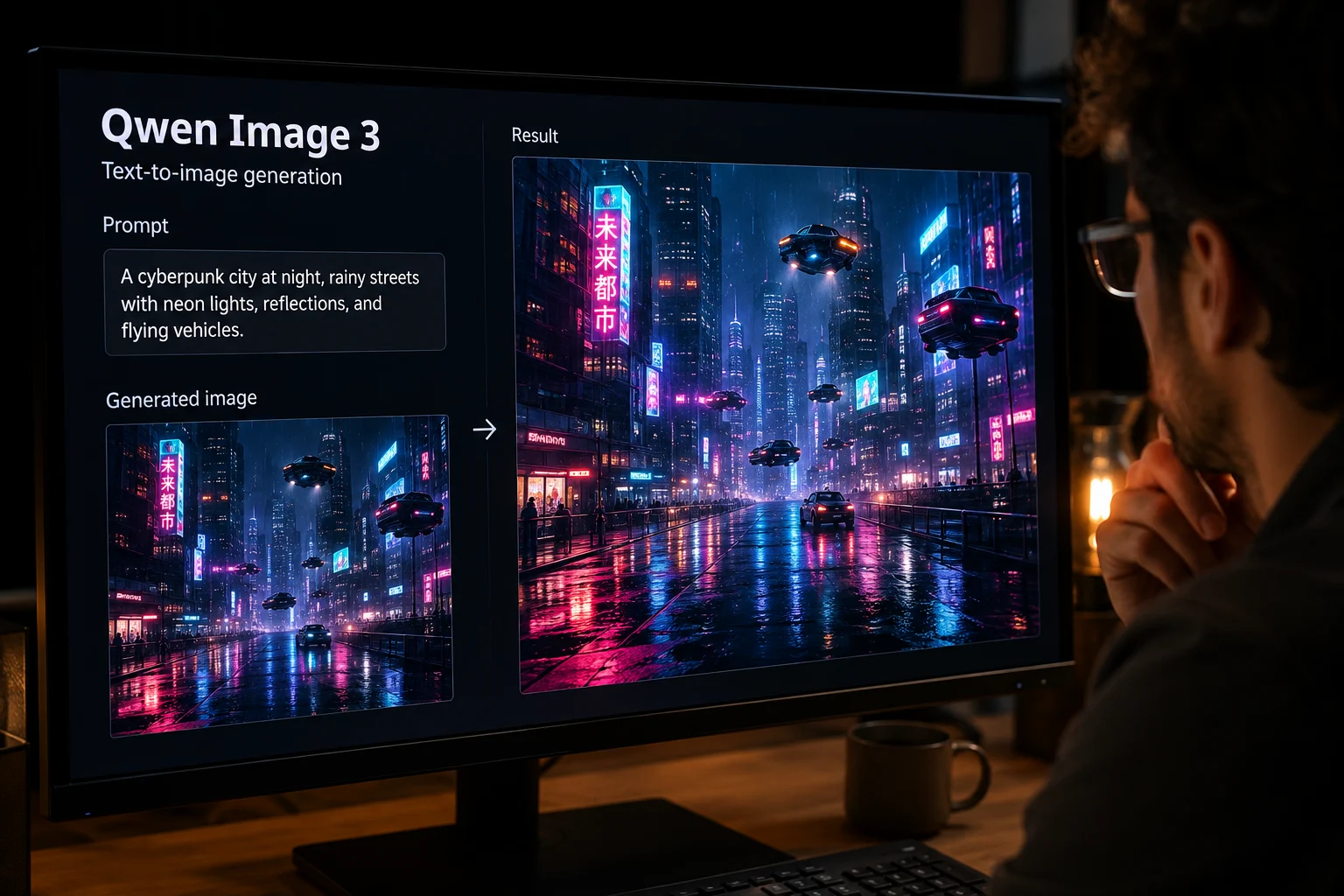
텍스트에서 이미지로 생성
문장으로 된 프롬프트에서 생성된 이미지를 만들고, 원래 브리핑 내용을 기준으로 주제, 배경, 스타일, 세부 사항을 비교하세요.
생산용 이미지 작업을 계획하기 전에 Qwen Image 3 모델의 기능, 지원 입력 항목, 사용 가능한 조절 옵션, 서비스 이용 가능 여부를 확인하세요.
Qwen Image 3은 프롬프트 기반 이미지 생성과 참조 이미지 안내 편집을 위한 알리바바의 이미지 생성 및 편집 모델입니다.
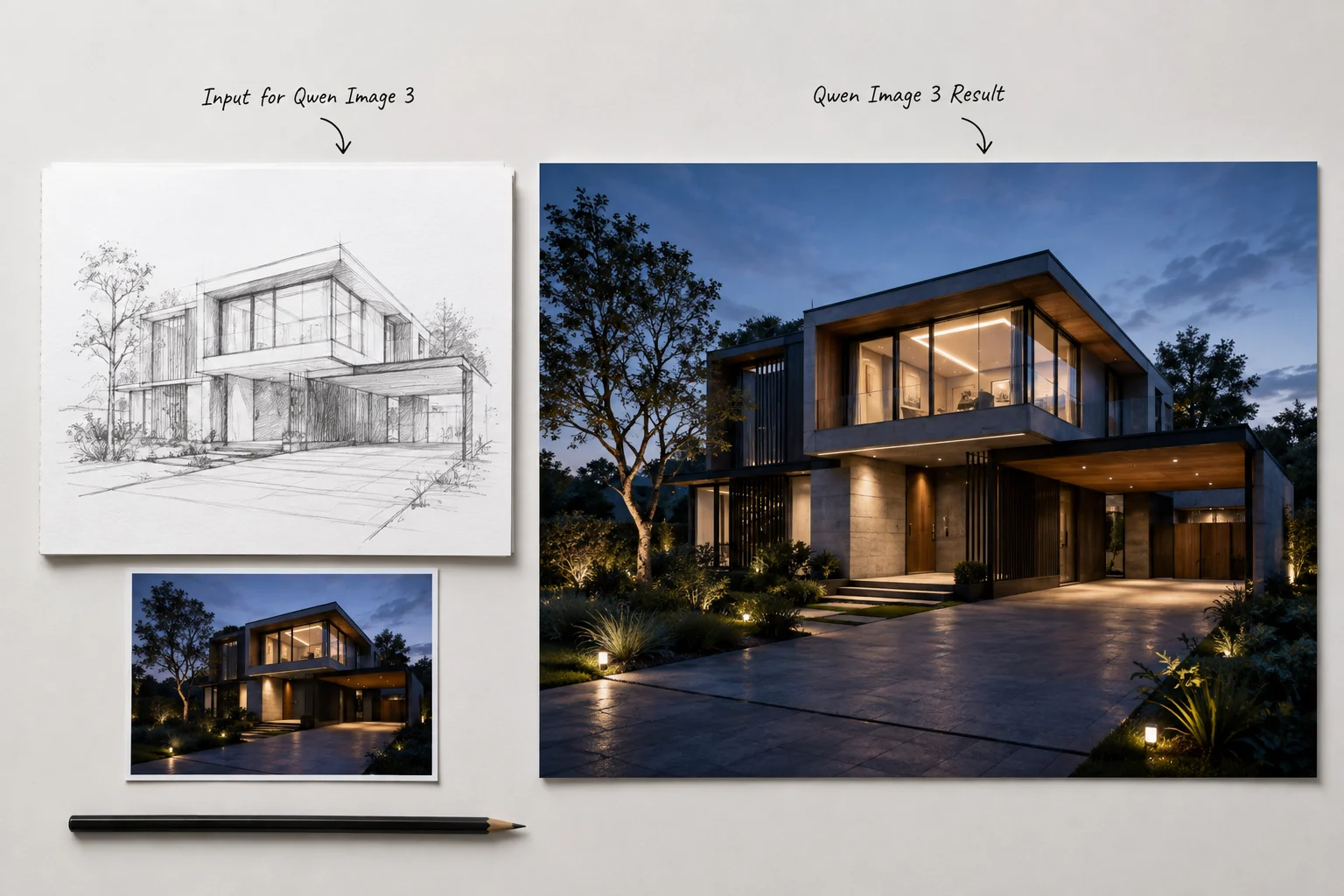
사용하기 전에 모델의 생성, 편집, 텍스트 중심 구도, 구조화된 시각적 레이아웃 기능을 검토하세요.
문장으로 된 프롬프트에서 생성된 이미지를 만들고, 원래 브리핑 내용을 기준으로 주제, 배경, 스타일, 세부 사항을 비교하세요.
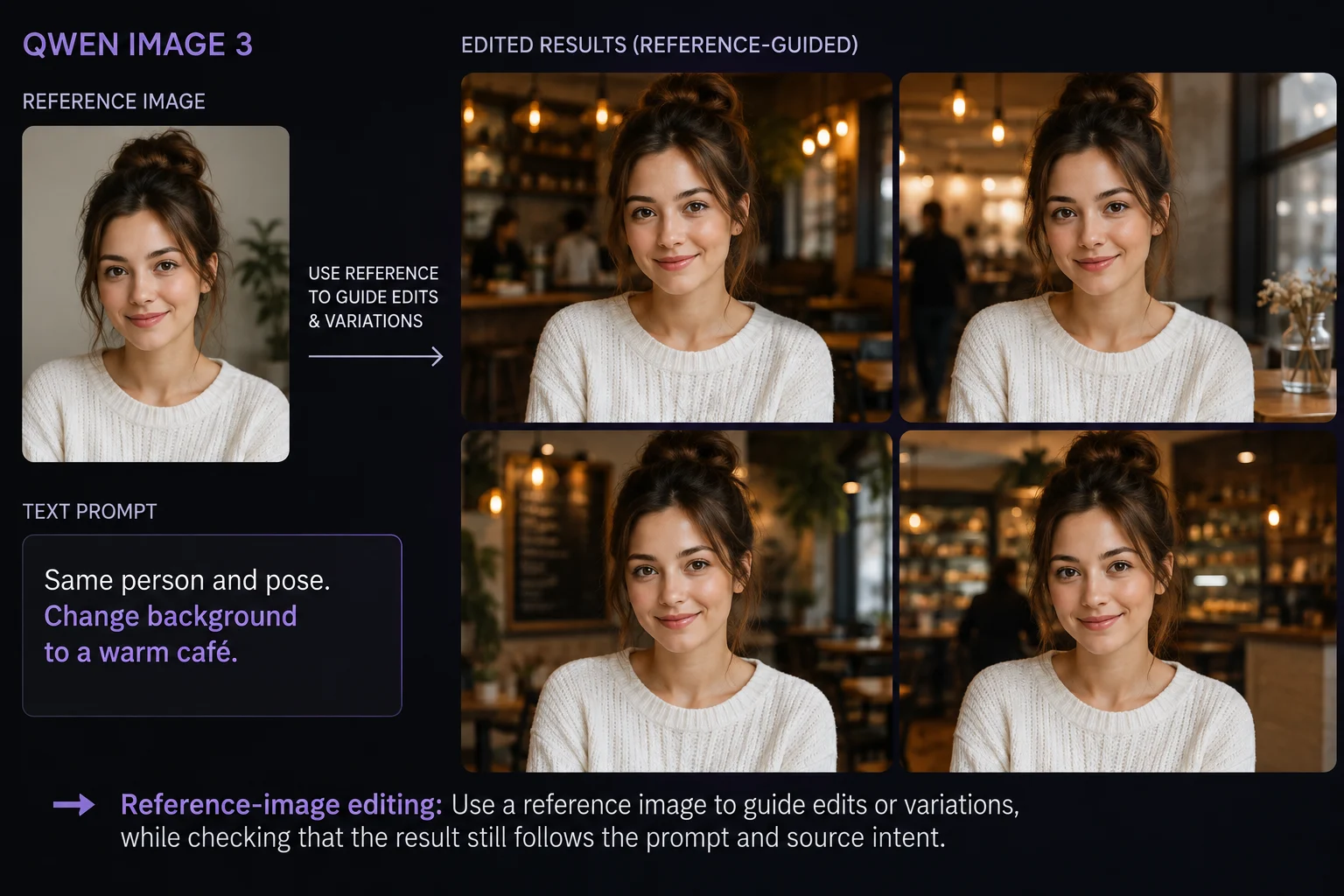
참조 이미지를 사용하여 편집이나 변형 작업을 안내하고, 결과물이 여전히 프롬프트와 소스 의도를 따르는지 확인하세요.
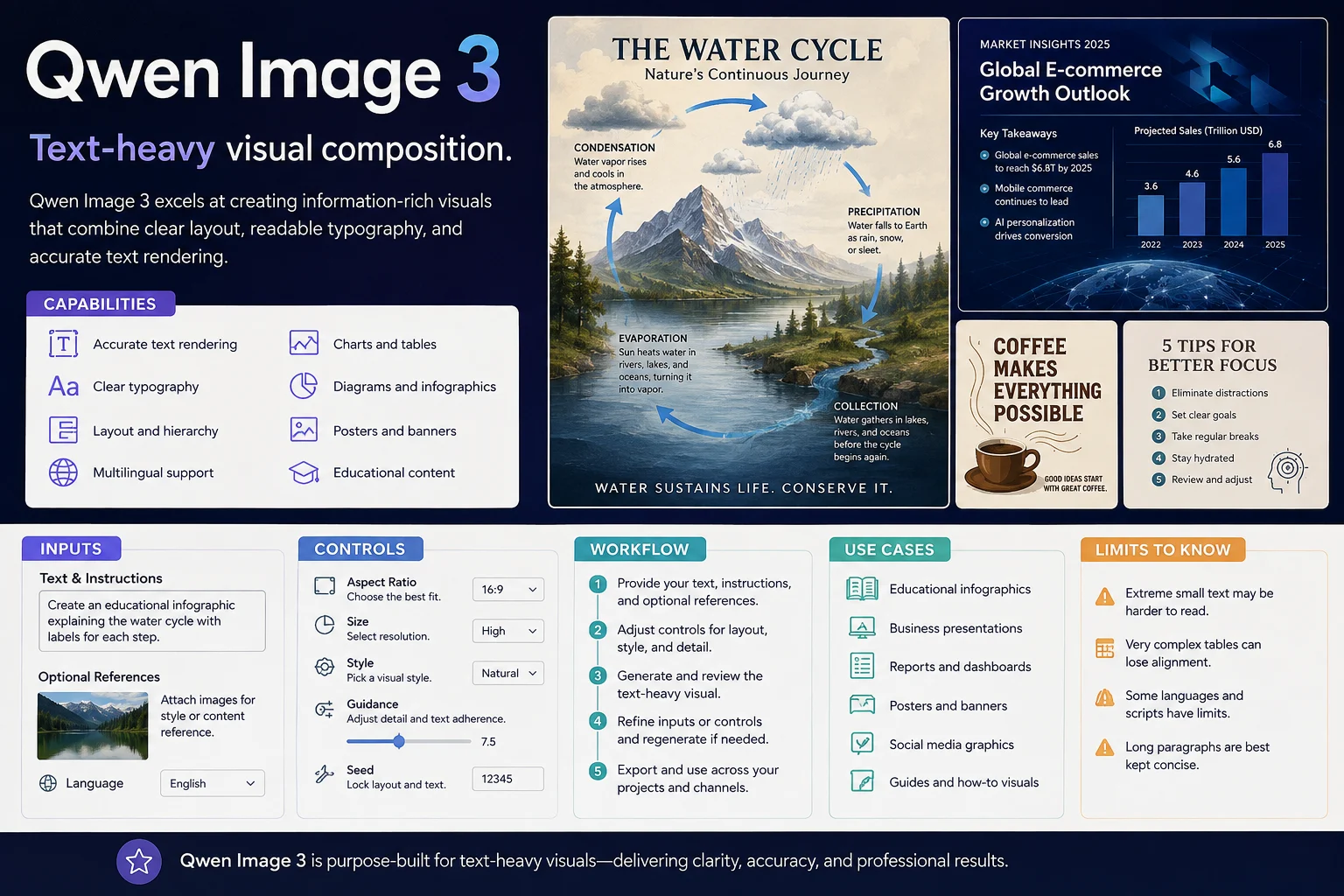
눈에 띄는 단어나 라벨이 포함된 시각 자료를 만들고, 생성된 텍스트는 세부 표현이 수정이 필요할 수 있으므로 꼭 교정 작업을 거치세요.
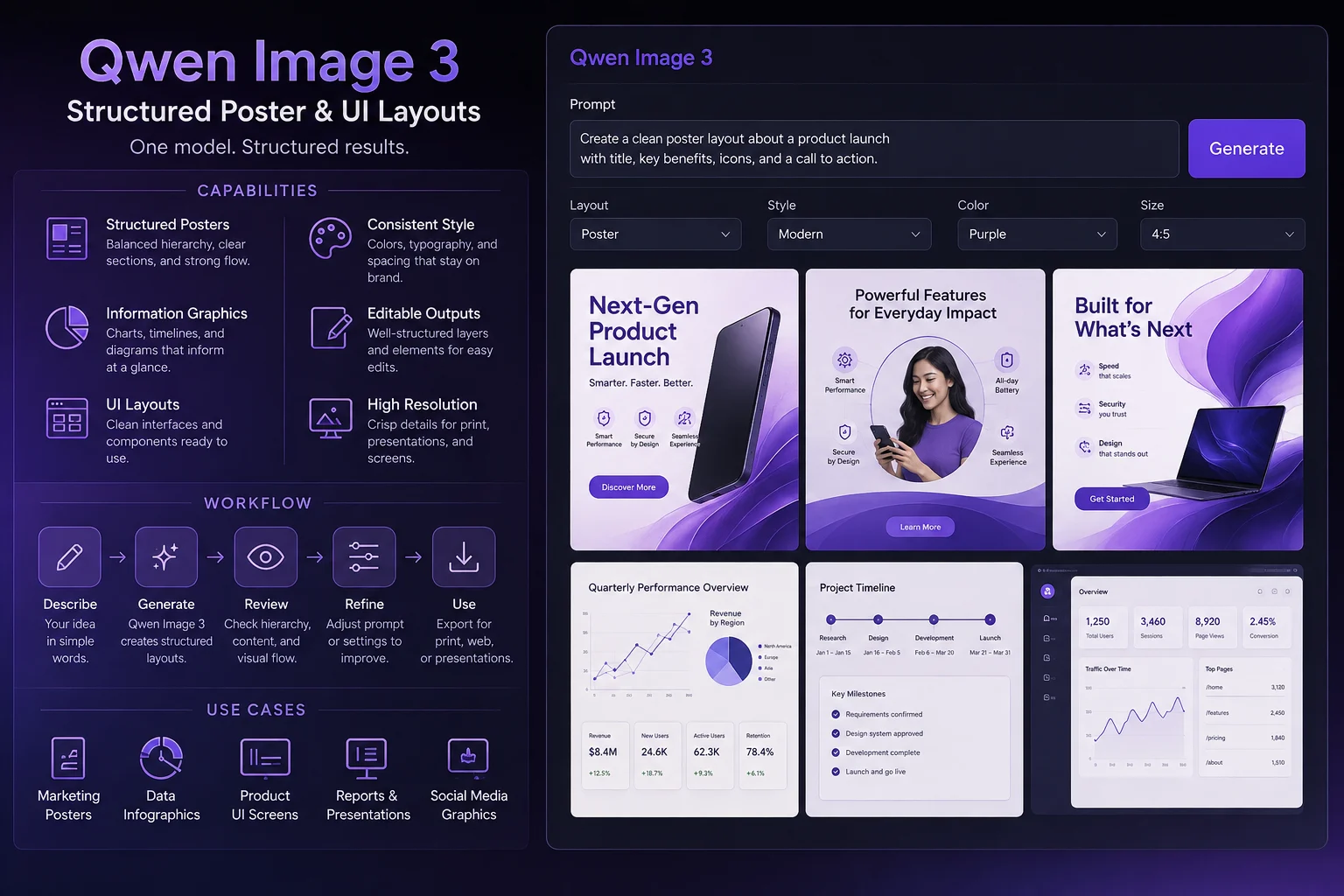
포스터, 인포그래픽, 인터페이스 스타일의 레이아웃을 탐구할 수 있으며, 최종 에셋에는 구조, 계층 구조, 크롭 방식이 중요합니다.
입력으로 텍스트 프롬프트나 참조 이미지를 사용한 다음, ClipCanva가 현재 노출하는 조절 항목만 활용하여 조절하세요.
qwen 3 이미지 입력 경로는 문장으로 된 프롬프트를 지원하며, 안내된 생성이나 편집을 위한 참조 이미지를 포함할 수 있습니다.
사용 가능한 조절 항목은 모델 선택, 화면비, 출력 개수, 해상도, 스타일, 프롬프트 향상, 생성 속도, 참조 이미지 등이 포함됩니다.
생성된 이미지와 참조 이미지 안내 편집 작업 결과물이 출력되며, 이들은 브리핑 적합성, 세부 사항, 목적지 포맷 여부를 꼼꼼히 확인해야 합니다.
프롬프트 주도 워크플로우를 따르고, 필요할 때 qwen 3 이미지 입력 참조를 추가하며, 최종 사용 전에 모든 결과물을 검토하세요.
조절 항목을 선택하기 전에 이미지 목적, 대상, 주제, 배경, 언어 필요성, 최종 배치 위치를 명확히 기술하세요.
구체적인 프롬프트를 작성하고, 편집이나 디인 목표를 지원할 때만 참조 이미지를 준비하세요.
표시되는 모델, 화면비, 출력 개수, 해상도, 스타일, 프롬프트 향상, 생성 속도, 참조 이미지 옵션을 선택하세요.
이미지를 생성하고, 대안을 비교하고, 미흡한 세부 사항을 검토하며, 한 번에 하나의 지시사항만 수정하세요.
생성하기 전에 이러한 사용 사례를 명확한 대상, 형식, 검토 기준, 지원 입력 항목 세트와 적절히 매칭시키세요.
다국어 포스터 방향을 작성한 다음, 생성된 문구와 시각적 계층 구조를 신중하게 교정하세요.
시각적 설명, 다이어그램 또는 요약 그래픽을 개발하되, 여전히 사실 확인과 레이아웃 검토가 필요합니다.
앱 화면 레이아웃이나 제품 사용자 인터페이스 개념을 탐구하면서 정렬, 가독성, 상호작용 맥락을 확인하세요.
참조 이미지를 활용하여 디자인 편집, 변형 또는 개선 작업을 안내하면서 의도된 소스 단서를 보존하세요.
생성된 각 이미지를 초안처럼 다루고, 마케팅, 이커머스 또는 디자인 작업에 사용하기 전에 반드시 검토 단계를 거치세요.
의도한 산출물과 프롬프트, 참조 이미지, 주제, 행동, 구도가 일치하는지 확인하세요.
눈에 보이는 텍스트를 교정하고, 작은 요소, 가장자리, 손, 제품 모양 및 기타 미세한 세부 사항을 꼼꼼히 살펴보세요.
승인된 소스 자료를 기준으로 제품 외관, 브랜드 요소, 주장 내용, 라벨, 실제 세부 정보를 확인하세요.
내보내기나 게시하기 전에 화면비, 해상도 선택, 프레임, 크롭, 목적지 요구 사항을 확인하세요.
이 페이지에 대한 이용 가능 여부는 검증되었지만, 출력 결과의 가변성과 인간의 검토는 책임 있는 워크플로우의 일부로 남아 있습니다.
Qwen Image 3은 이 페이지에서 연결되어 있으며, 제출 전에 표시되는 옵션만 오늘 실행할 수 있는 작업 범위를 정의합니다.
실행마다 결과가 달라지므로, 사용하기 전에 출력물을 비교하고 프롬프트 적합성, 세부 사항, 제품 정확성, 크기, 크롭 방식을 꼭 검토하세요.
ClipCanva는 이 페이지에서 노출된 제어 항목만 지원하며, 생성된 텍스트는 게시 전에 여전히 교정 작업이 필요합니다.
정보 확인일
Qwen Image 3 모델의 정체성, 입력, 조절 옵션, 이용 가능 여부, 검토 기대 사항에 대한 간결한 답변을 확인하세요.
워크플로우를 선택하기 전에 다른 이미지 모델을 지원 입력, 표시 조절 항목, 예상 출력, 현재 이용 가능 여부를 기준으로 비교하세요.
명확한 프롬프트로 시작하고, 사용 가능한 조절 옵션을 확인하고, 최종 사용 전에 생성된 이미지를 검토할 시간을 충분히 확보하세요.